How Do I Draw Black Fur Without It Looking Like a Flat Blob?
How Do I Draw Black Fur Without It Looking Like a Flat Blob?
If you enjoy drawing animals, you’ve probably faced this challenge at some point: black fur that turns into a flat, lifeless shape.
Many artists find black animals intimidating to draw. Whether it’s a black dog, a cat or a horse, the same issue often appears in the early stages of learning. Instead of rich, textured fur, the drawing becomes a solid dark mass with very little form.
The good news is that this is a very common problem, and it usually comes down to a few key misunderstandings about how we see and draw dark colours.
Black Fur Isn’t Really Black
One of the biggest surprises for artists is that black fur is rarely just black.
When you look closely at animals with dark coats, you’ll often notice subtle colour variations. Depending on the lighting and surroundings, black fur can contain hints of deep blues, warm browns, reds, purples, and even reflected colours from the environment.
If we reach straight for a black pencil and fill an area with a single colour, the result will almost always appear flat. Instead, darker areas usually benefit from being built up with layers of several colours, which creates a much richer and more natural result.
This approach is particularly helpful when working with coloured pencils, where layering is one of the most effective ways to create depth.
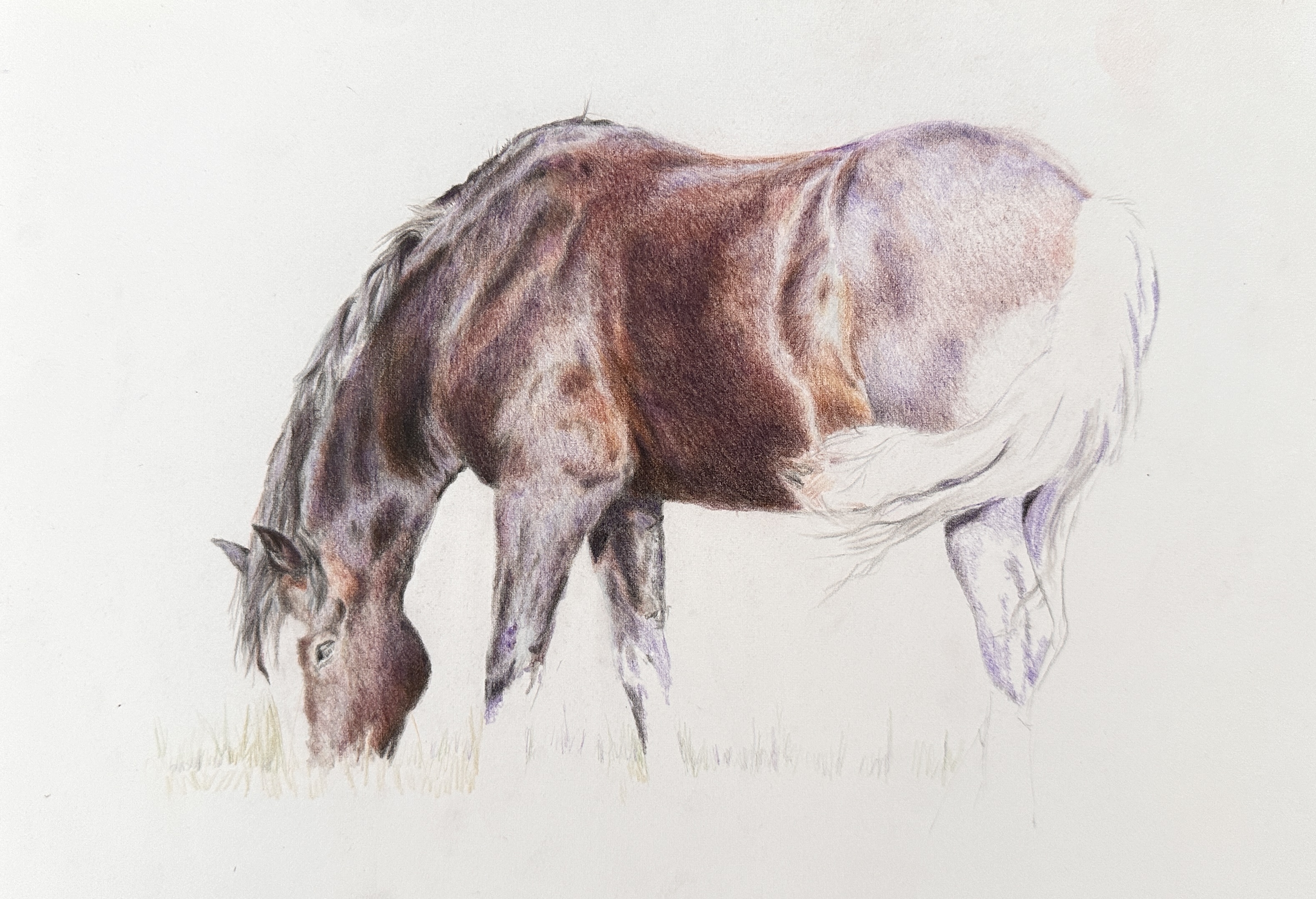
These are the under-layers for a black horse.
Values Are More Important Than Colour
Another common mistake is focusing too much on the colour and not enough on the values.
Even animals with very dark coats still have a full range of tones. There will be areas of deep shadow, softer mid-tones, and places where the fur catches the light. These changes in value are what give the animal its shape and form.
When the entire subject is drawn as one dark tone, the form disappears, and the animal begins to look like a silhouette rather than a three-dimensional subject.
A helpful approach is to simplify what you see and focus first on the light and dark patterns across the animal. Once the values are working well, the drawing will naturally start to look more realistic.
Pay Attention to the Direction of the Fur
Texture also plays a large role in preventing black fur from appearing flat.
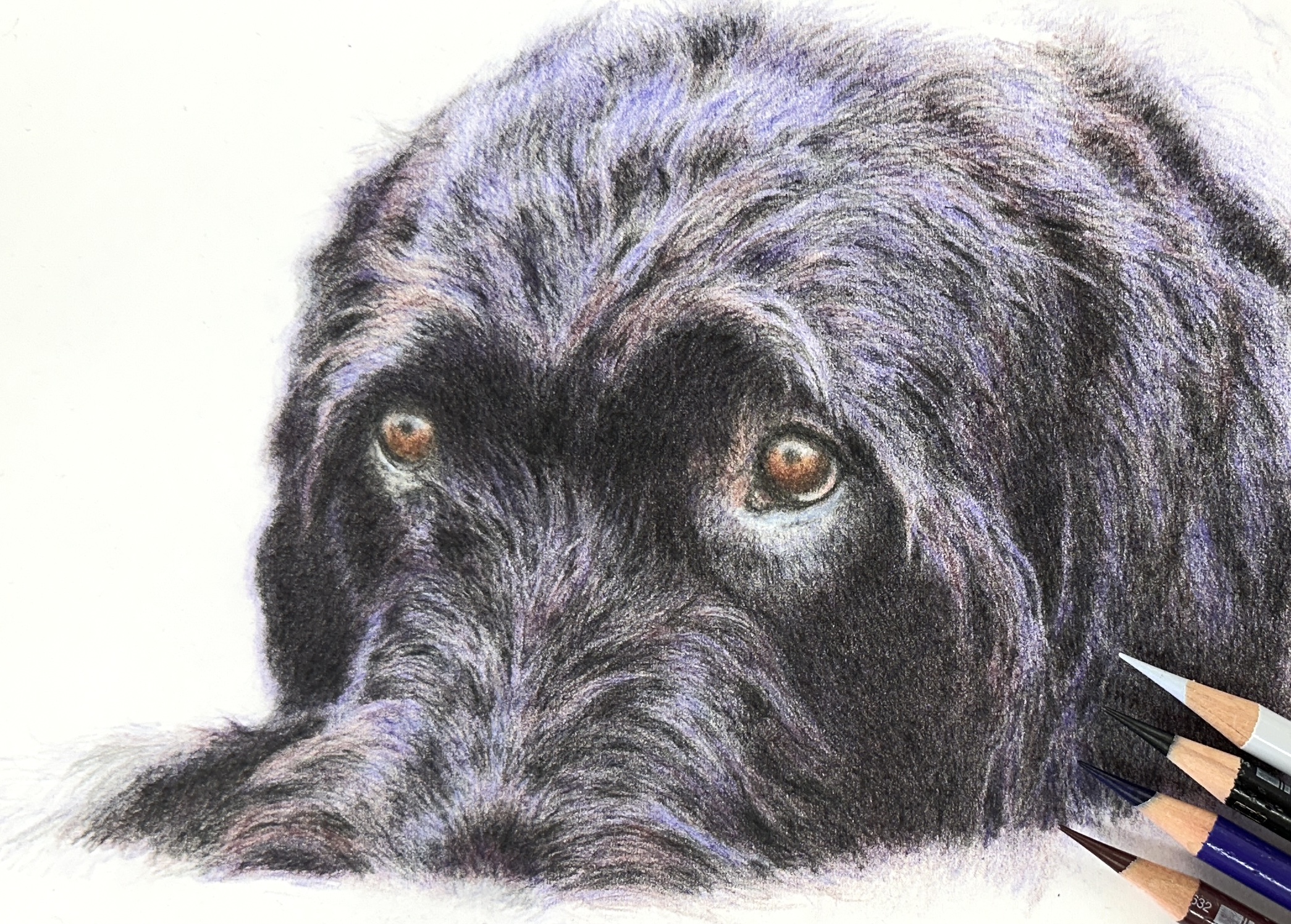
Fur grows in specific directions across an animal’s body, and those directional changes help describe the underlying structure. Instead of filling areas evenly, it helps to observe how the fur flows and allow your pencil strokes to follow that direction.
Working in smaller sections can make this much easier. When you slow down and focus on one small area at a time, it becomes clearer how the fur overlaps, curves, and changes direction across the form.
Build Dark Areas Gradually
Patience is particularly important when drawing darker subjects.
Applying heavy pressure too early can flatten the tooth of the paper and make it difficult to add subtle variations later. Instead, it’s usually better to begin with light layers, gradually deepening the values as the drawing develops.
This slower approach allows you to maintain control over the tones and helps prevent the surface from becoming overly dark too quickly.
Look for the Light
Even very dark animals will often have small areas where the fur reflects light. These highlights may appear as slightly lighter strands of fur or soft areas of reflected light along curved parts of the body.
These lighter passages are incredibly important because they help break up large dark shapes and create the illusion of texture and shape anatomy.
Without them, the drawing can easily start to feel heavy and uniform.
A Simple Trick That Helps
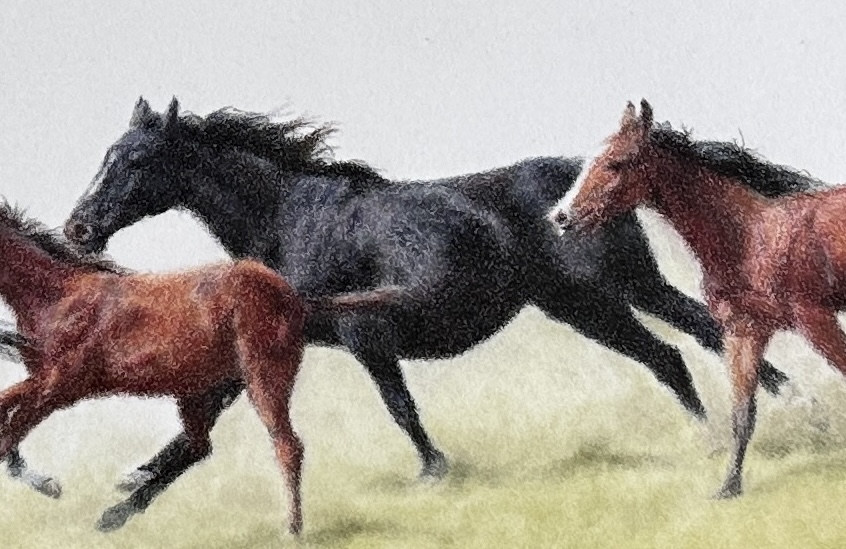
If you ever find it difficult to see the value structure in a dark subject, try squinting at your reference image.
Squinting reduces the amount of detail you see and makes the main shapes of light and shadow much clearer. This can be a helpful way to identify the larger value patterns before focusing on the smaller details of the fur.
Final Thoughts
Drawing black fur successfully isn’t about using more black pencil. It’s about learning to see the subtle changes in tone and colour that exist within dark subjects.
When you focus on values, layered colour, fur direction, and the gradual building of dark tones, black animals gain depth and realism rather than appearing as flat shapes.
Like many aspects of drawing, it also becomes easier with practice. Spending time studying darker animals can greatly improve your ability to observe values and texture, skills that will strengthen all of your animal drawings.
And once you start to see those subtle variations in dark fur, drawing black animals becomes not only easier, but incredibly rewarding.